The most expensive moment in business is the one where you find out too late.
The margin that had been leaking quietly for months. The client who'd already decided to leave before anyone noticed. The risk that was sitting in the data the whole time, plain as day, if only someone had been looking in the right place.
None of these were dramatic failures. They were quiet ones. And quiet failures are the costly kind, because by the time they're loud enough to notice, the damage is already done.
I've spent years walking into businesses and naming these patterns. A freight operator learning a job lost money a full month after the job ended. A founder discovering a margin problem only when the year's numbers refused to add up. Every time, the same root cause — the business was running on hindsight.
Hindsight is the default. It shouldn't be.
Most operations are built to tell you what already happened.
The report lands at month-end. The dashboard shows you last week. The review meeting examines a decision made six weeks ago. All of it is true, and all of it is late.
You can run a business this way. Many do. But you're always one step behind your own operation — reacting to the fire instead of seeing the smoke. And reaction is expensive. Recovery always costs more than prevention.
The shift I want you to make is simple to say and powerful to live: stop reacting, start anticipating.
What foresight actually looks like
This is where AI earns its place — not as a faster clerk, but as a sharper set of eyes.
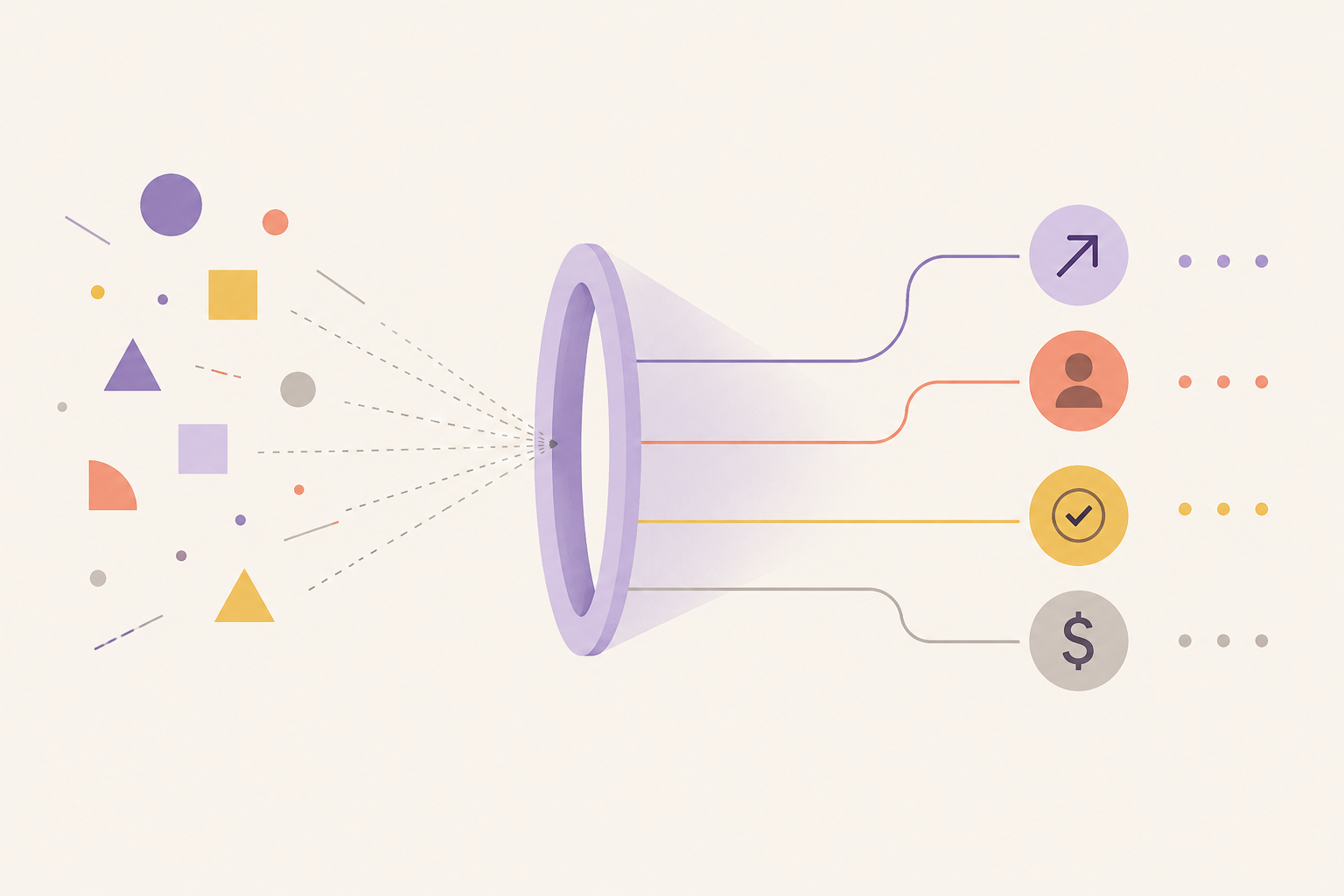
Point it at the same data you already collect, and it starts noticing things earlier than you would. The risk forming three weeks before it surfaces. The pattern in the numbers that says this account is about to slip. The small deviation that, left alone, becomes next quarter's problem.
It catches the problem early, while it's still small and cheap to fix.
And it works the other way too. The same eyes that spot the risk also spot the opening — the customer ready to grow, the cost quietly worth cutting, the opportunity hiding in plain sight. Foresight isn't only defence. It's knowing where to lean in.
Over time it becomes a daily partner, not a monthly report. You ask it what's worth your attention today, and it tells you — weighing cost, time, and consequence in seconds, the way a sharp advisor would. Fewer errors slip through. Better calls get made. Not because the machine decides for you, but because you're deciding with the full picture in front of you instead of half of it.
Foresight has to meet reality
Here's the discipline that separates real foresight from a clever guess.
A prediction that looks right on paper but ignores what's actually happening on the ground is worse than no prediction at all — it gives you false confidence. The plan has to meet reality. The forecast has to be checked against what the operation is really doing, not what the spreadsheet assumes it's doing.
Good AI does this. It reconciles intent with reality — what you planned against what's actually unfolding — and tells you where the two have drifted apart. That gap, named early, is where most problems live before they grow.
This is also why foresight changes how you make choices. Instead of committing to one option and hoping, you can explore many before you move — generate the alternatives, weigh them honestly, and pick the one that holds up. Decisions made this way are calmer. You've already seen the versions that don't work.
From reaction to prevention
Put it together and something quiet but profound changes in how a business feels.
The watching never stops. Things that used to go wrong unnoticed now get flagged the moment they start to drift. You move from cleaning up after problems to preventing them — from a business that lurches between fires to one that runs steady because someone, or something, is always looking ahead.
That steadiness is the real prize. Not the technology. The calm that comes from no longer being surprised by your own operation.
This is the diagnosis, made continuous
I'll be honest about why this matters so much to me.
My whole method begins with diagnosis before prescription. I don't recommend before I understand. I find the leak, name the pattern, and quantify the cost — because that's what earns the right to build anything at all.
Foresight is that diagnosis made continuous. Not a one-time session, but a permanent set of eyes on the operation, naming the pattern the moment it appears. I do not chase revenue. I architect it — and you cannot architect what you cannot see coming.
So here's the question I'll leave you with.
What is your business about to tell you — that you won't hear until it's already too late?
The whole point of foresight is to hear it now, while you can still do something about it.
If that's the gap you're sitting in, that's the conversation I have first — the diagnosis before anything gets built. When you're ready, that's where we start.
Innovation is a journey, not a commodity. We engineer the enterprise you're becoming.
John Cherian · Founder, Bizinnox · Singapore